Foot traffic analytics: turn counts into a defined operating decision
A useful foot-traffic pilot starts with a definition. Decide which area and event you want to measure, compare the camera evidence with a reference count, and record the exceptions. Only then use the result to inform an operating decision such as staffing or queue management.
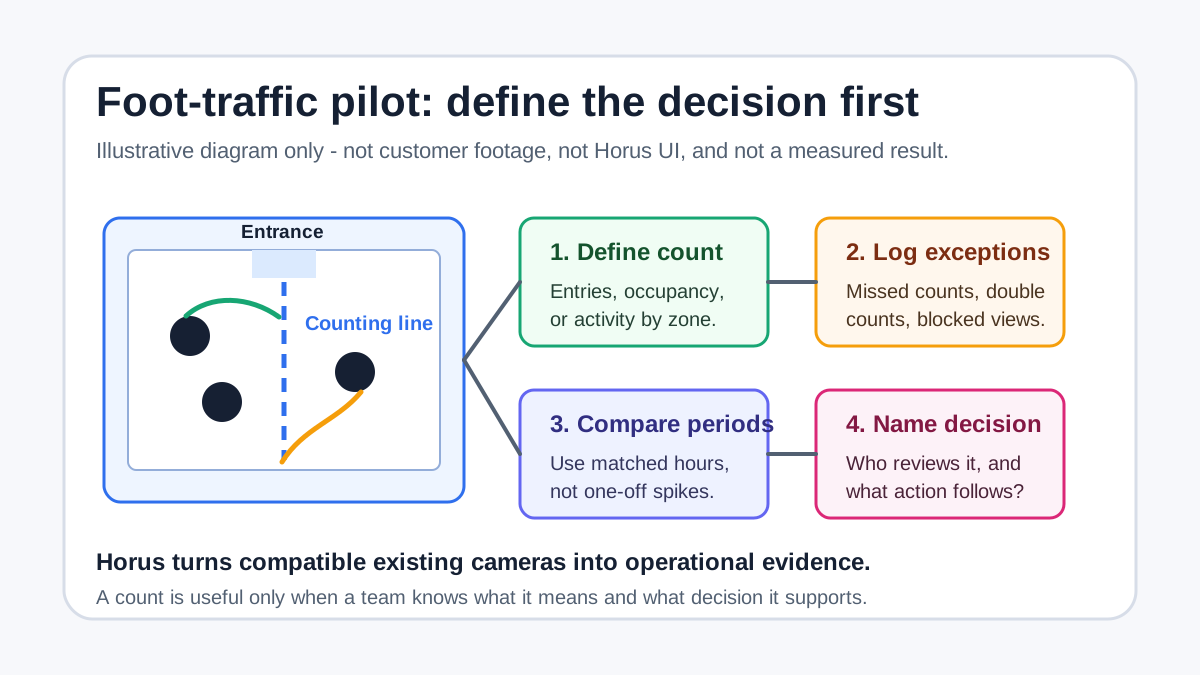
A five-step foot-traffic pilot
Define the event and area
Choose one question: entries across a line, people within a zone, or activity during a defined period. These measures are different. Mark the entrance or area, specify direction where relevant, and agree how staff, repeat visits and excluded areas will be handled.
Verify camera and host suitability
Confirm authorized access to a compatible feed, suitable camera placement, visibility and lighting, and a Windows host that meets the current setup requirements. Check coverage during busy periods, including occlusion and people moving together. Compatibility alone does not establish counting accuracy.
Compare with a reference count
Arrange permitted manual observations for the same area, event and time window. Include ordinary and difficult conditions. Keep the reference sample size and compare matched periods rather than totals collected at different times.
Record exceptions and uncertainty
Log missed or double counts, downtime, obscured views, configuration changes and missing observations. Agree an acceptance threshold before the review. An empty result or an unavailable camera is not evidence of zero foot traffic.
Make a named operating decision
Ask the responsible manager whether the evidence supports a specific staffing or queue-management decision. Record the action and its reasoning. Expand the pilot, correct the setup and repeat, or stop if the evidence is unsuitable. A count is an input to a decision, not proof of an improvement.
Check the setup before you choose a review date
The pilot needs an authorized camera feed, a suitable host and an agreed reference method. Establish permitted handling of footage, metadata and any optional snapshots with the responsible people. This page does not establish legal compliance or a guaranteed accuracy level.
Questions to settle before expanding
Can I use my existing cameras?
Start with the camera compatibility guidance and verify the actual feed, placement and host setup. An RTSP or ONVIF label does not guarantee that every model or installation will produce useful counts.
How quickly can a pilot be ready?
Timing depends on camera access, host suitability, configuration and the reference observations you need. Review the setup instructions before choosing a pilot date; there is no guaranteed one-hour or one-day deployment.
Does a pilot prove accuracy or a business outcome?
No. Compare the agreed event against reference observations, document exceptions and keep the sample size. Evaluate an operating outcome separately, using matched periods and a named reviewer.
Start with a compatible-camera pilot
Review camera and host requirements first. Create your account when you are ready to configure a suitable setup.
Create your account